
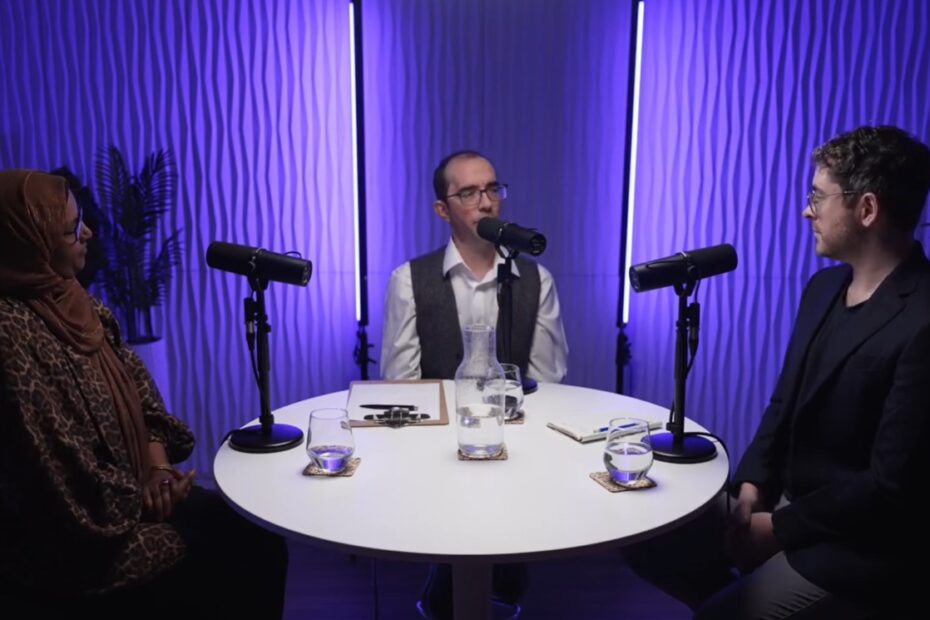
Reflections on a recent Antitheses Project conversation
In a recent Antitheses Project podcast, Dominic Wilkinson (Uehiro Oxford Institute), Brian D. Earp, and Zainab Nur (Hidden Voices UK) discuss an extended essay published in the Journal of Medical Ethics (2025) examining the unintended harms of the dominant global campaign against female genital cutting (FGC), often referred to as “female genital mutilation” (FGM). The conversation situates the article within broader debates in bioethics, public health ethics, and political philosophy concerning bodily autonomy, cultural pluralism, and the ethics of harm reduction.
The JME article critically interrogates what the authors describe as the prevailing “standard tale” about FGM: a widely institutionalised narrative embedded in international law, global health policy, and human rights advocacy. While acknowledging that many forms of non-consensual genital cutting raise serious ethical concerns — particularly regarding children’s rights and bodily integrity — the authors argue that the standard framing can obscure important distinctions between different practices, meanings, and contexts. Moreover, they suggest that certain modes of advocacy may generate collateral harms, including stigma, racialised stereotyping, epistemic marginalisation of affected communities, and barriers to open clinical dialogue.
The podcast explores several interrelated ethical questions. First, how should we evaluate culturally embedded bodily practices that are contested both within and across communities? Second, what are the moral risks of adopting rhetorically absolutist language in public health campaigns? Third, can there be a coherent and non-arbitrary ethical framework for evaluating female genital cutting alongside other forms of medically unnecessary genital modification, including those widely accepted in Western contexts?
A central theme of the discussion concerns the ethics of language. The term “mutilation,” while intended to signal moral gravity, may function not merely descriptively but also normatively — shaping public perception, policy responses, and the self-understanding of those labelled. The speakers examine whether such language forecloses meaningful engagement, and whether alternative frameworks might better promote health, autonomy, and harm reduction without reinforcing stigma.
Importantly, the conversation does not deny the existence of harm or the legitimacy of efforts to protect children from coercive or injurious practices. Rather, it calls for greater conceptual clarity, empirical sensitivity, and ethical consistency. This includes attention to proportionality, respect for cultural agency, and the avoidance of double standards in evaluating comparable bodily interventions.
The discussion exemplifies the aims of the Wellcome-funded Antitheses Project: to foster rigorous, good-faith engagement across deep moral disagreement, especially in areas where public discourse is polarised and ethically complex. By bringing together philosophical analysis, empirical scholarship, and lived perspectives, the conversation invites scholars, clinicians, and policymakers to reflect not only on what justice requires, but also on how ethical commitments are articulated and enacted in practice.
Watch on YouTube: