
Blog post by professor Roger Crisp
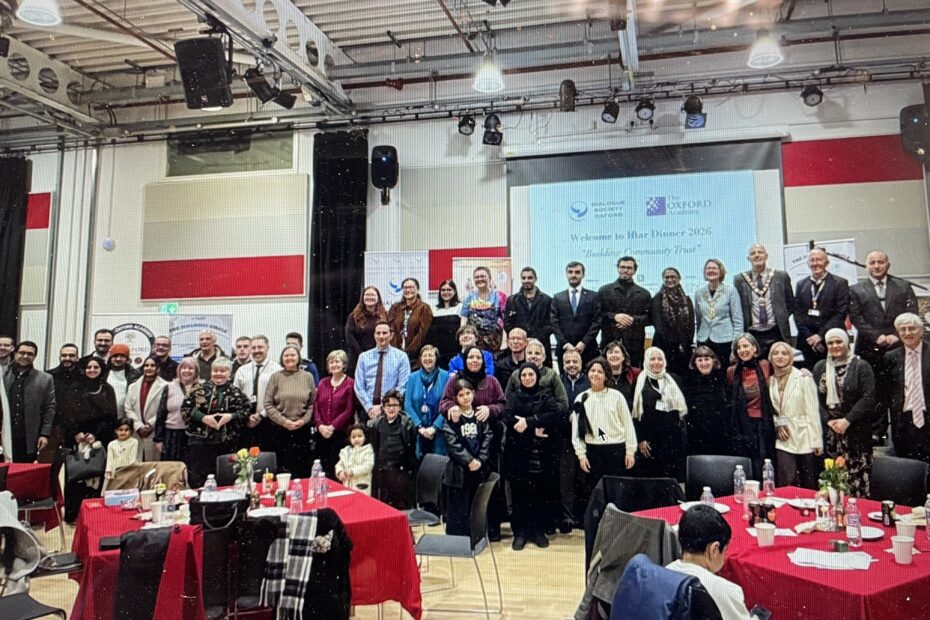
On 12th March, I was delighted to be invited to attend the 4th Ramadan Community Iftar organized by the Dialogue Society in partnership with The Oxford Academy. The event involved a wonderfully diverse group of participants, including civic leaders, community and faith representatives, charity members, students, academics, parents, and people of all faiths and none.
This year’s theme, ‘Building Community Trust’, highlighted the importance of unity, dialogue, and collaboration across all walks of life. It was an inspiring evening of connection, conversation, and celebration.
Your ability to take part in such activities is truly enviable.
Like Nietzsche, I am a solitary independent researcher. Nietzsche declared himself the Übermensch, yet ten years later he lost his mind. I called myself a genius, hoping that this would grant me swift entry into academic institutions and allow me to realize my scientific dreams. Yet fifteen years have passed, and still no one has paid attention. Now, growing old and struggling to make a living, I find myself at a loss.
I kindly ask this platform to allow me to introduce my theory — the Three Principles of Eudaimonia (2026, fourth edition). It reconstructs ethics, game theory, political science, jurisprudence, pedagogy, global governance, and even the operating system of individuals and society. As the platform’s algorithm prevents me from sharing the preprint address, those who are interested will have to search for it themselves.
Comments are closed.