
-
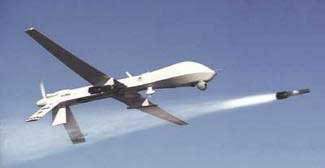
The double standard of objections to drone strikes against US citizens
On Monday, NBC News released a bombshell memo from the US Department of Justice justifying the killing of American citizens who are believed to be senior al-Qaida leaders. That in itself is not necessarily news – the US famously used a drone strike to kill its own citizens, Anwar al-Awlaki and Samir Khan, in 2011.…
-
Alexandre Erler – ‘Sleep and Opportunity for Well-Being’ – Talk Podcast
Many of us are guilty of sleeping more than we really need to. Moreover, some people just need more sleep than others. In this talk, (which you can listen to here) Alexandre Erler argues that this means that many of us (who sleep excessively) are severely restricting our opportunities for well-being, and that the unfortunate…
-
Anthony Skelton: ‘Two Conceptions of Children’s Welfare’ – Talk Podcast
In the latest St. Cross Ethics Seminar (which you can listen to here) Anthony Skelton investigates how we should construct an adequate theory of welfare for children.
-
Political Authority?
An underlying assumption of much debate on this blog is that the government has the right to boss people about and the question at issue is merely which bit of bossing about the government should be doing. Despite the fact that the left are obviously very keen on bossing people about, this assumption is one…
-
Is progressivism the biggest threat to science?
In the latest New Scientist, Alex Berezow and Hank Campbell attempt to redress what they see as an imbalance in perceptions of how political views affect attitudes to science. It is widely held today – in the wake of books like The Republican War on Science, Christian conservative opposition to evolution and well-documented interference into science policy…
-
Don’t stay up and decide: sleep deprivation and the culture of late night summits
Would you trust a minister of finance explaining how he just fixed the latest euro-zone deal if he came out of the summit chambers tipsily waving a glass of wine? No? What about if he gave a press conference after an all-night session? Most likely nobody would even notice. Yet 24 hours without sleep has (roughly) the…
-
Values for Geoengineering Governance
Geoengineering as a response to anthropogenic climate change is of increasing interest to members of the scientific community. The challenges of developing technologies powerful enough to manipulate the global climate are considerable and varied. As well as the scientific and technical issues, many people (understandably) have concerns about geoengineering. Hence issues of governance are…
-
Taj’s Choice
In a story reminiscent of the film ‘Sophie’s Choice’ Taj Mohammed, a refugee in afghanistan, tells the BBC that he chose to sell his six-year-old daughter Naghma to pay off a debt to a distant relative. To keep his family alive, he took out a loan of $2,500. When the relative demanded the money back,…
-
What’s Wrong with Infecting Humans?
Earlier this month, I attended a conference on Controlled Human Infection Studies in the Development of Vaccines and Therapeutics. These studies involve deliberately infecting healthy volunteers with a disease (such as malaria, typhoid, norovirus, or salmonella) in a controlled environment. This research has significant benefits for the development of vaccines [some of the benefits are…
-
Flu researchers impartially decide dangerous flu research is safe
Flu researchers have looked deeply at their own field, and decided that everything they were doing is all fine. Where the potentially hideously dangerous H5N1 bird-flu virus is concerned, They said that the benefits of the research in preventing and dealing with a future flu pandemic outweigh the risks of an accidental leak of the mutant…