Skip to content

Autonomy

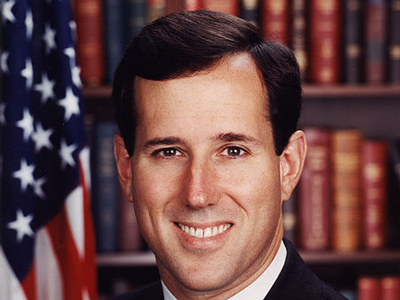
Rick Santorum, birth control, and “playing God”

By Brian Earp

See Brian’s most recent previous post by clicking here.

See all of Brian’s previous posts by clicking here.

Follow Brian on Twitter by clicking here.

Rick Santorum, birth control, and “playing God”

Rick Santorum thinks that birth control is immoral. Santorum, a former Senator from Pennsylvania, is one of two human beings – if the polls have it right – likeliest to become the Republication nominee for President of the United States this election cycle.

Read More »Rick Santorum, birth control, and “playing God”

Love and other drugs, or why parents should chemically enhance their marriages

By Brian Earp

See Brian’s most recent previous post by clicking here.

See all of Brian’s previous posts by clicking here.

Follow Brian on Twitter by clicking here.

Love and other drugs, or why parents should chemically enhance their marriages

Valentine’s day has passed, and along with it the usual rush of articles on “the neuroscience of love” – such as this one from Parade magazine. The penner of this particular piece, Judith Newman, sums up the relevant research like this:

It turns out that love truly is a chemical reaction. Researchers using MRIs to look at the brain activity of the smitten have found that an interplay of hormones and neurotransmitters create the state we call love.

My humble reckoning is that there’s more to “the state we call love” than hormones and neurotransmitters, but it’s true that brain chemistry is heavily involved in shaping our experience of amour. In fact, we’re beginning to understand quite a bit about the cerebral circuitry involved in love, lust, and human attachment—so much so that a couple of Oxford philosophers have been inspired to suggest something pretty radical.

They think that it’s time we shifted from merely describing this circuitry, and actually intervened in it directly—by altering our brains pharmacologically, through the use of what they call “love drugs.”

Read More »Love and other drugs, or why parents should chemically enhance their marriages

Choosing one’s own (sexual) identity: Shifting the terms of the ‘gay rights’ debate

Choosing one’s own (sexual) identity: Shifting the terms of the ‘gay rights’ debate

By Brian Earp (Follow Brian on Twitter by clicking here.)

UPDATE: See HuffPost Live debate on this topic here.

Can you be gay by choice? Consider the following, from the Huffington Post:

Former “Sex and the City” star Cynthia Nixon says she is gay by “choice” – a statement that has riled many gay rights activitists who insist that people don’t choose their sexual orientation.

Read More »Choosing one’s own (sexual) identity: Shifting the terms of the ‘gay rights’ debate

10-year-old gets a tattoo, mother gets arrested

By Brian Earp

Follow Brian on Twitter by clicking here.

See Brian’s most recent prior post on this blog here.

See a list of all of Brian’s previous posts here.


Inking arms, piercing ears, and removing foreskins: The inconsistency of parental consent laws in the State of Georgia 

Gaquan Napier watched his older brother die in Acworth, Georgia after being hit by a speeding car. He was with him in those numbing final moments. And now Gaquan wants to keep his brother close to his own heart as he picks up the pieces and moves through life: in the form of a tattoo on his upper arm. Malik (that’s his brother’s name) plus the numbers from Malik’s old basketball jersey. Rest in peace. A memorial to his sibling and best friend, whose life was cut tragically short.

Gaquan is ten years old. So he asked his mother, Chuntera Napier, about the tattoo. She was moved by the request, by the sincerity and maturity of her son’s motivations. She assented. She took Gaquan to have the remembrance he wanted etched into his arm in ink.

Now stop the presses. Chuntera was arrested last week under child cruelty laws and for being party to a crime. Someone at Gaquan’s school had seen his tattoo and tattled to the authorities. But what was the offense?

Read More »10-year-old gets a tattoo, mother gets arrested

What is so bad about polygamy?

By Brian Earp (Follow Brian on Twitter by clicking here.)

What do gay marriage and polygamy have in common?

To find out, watch this exchange between US Republican presidential hopeful Rick Santorum, and a New Hampshire college student.  Here’s an edit to give the gist:

Student: How about the ideas that all men are created equal, and the rights to happiness and liberty? [Applause.]

Santorum: Ok, so — Are we saying that everyone should have the right to marry?

Audience: Yes! Yes!

Santorum: Everyone? Ok, so, anybody can marry anybody else.

Audience: Yes, yes!

Santorum: So anyone can marry several people? …

Read More »What is so bad about polygamy?

Legalize heroin

By Brian Earp

Follow Brian on Twitter by clicking here.


Forget about “medical marijuana.” Isn’t it time to legalize heroin in the United States? Recreational cocaine? Ecstasy? LSD? How about the whole nefarious basketful of so-called ‘harder’ drugs?

Yes, it is, says Ron Paul, a fourteen-term libertarian congressman and obstetrician from the state of Texas. It’s a view shared by virtually none of his Republican colleagues, nor, for that matter, very many Democrats. Nor really anyone in the “mainstream” of American politics. But in this post, I’ll argue that he’s right.

Paul—who is currently making his third bid for President of the United States—offered his perspective to comedian and Daily Show host Jon Stewart in an interview earlier this week:

Read More »Legalize heroin

Shocking behavior: Government scare tactics, smoking, and public health

Coming to a mini-mart near you. The FDA has just approved nine very grisly looking warning labels—to be slapped on cigarette packs throughout the USA. But will they work to cut smoking … or will they backfire?

Here are some of the top reasons why these labels may not only fail to achieve the FDA’s desired outcome, but could actually do the opposite – leading to more smoking, not less.Read More »Shocking behavior: Government scare tactics, smoking, and public health

Knowing is half the battle: preconception screening

In a recently released report the UK Human Genetics Commission said there are “no specific social, ethical or legal principles” against preconception screening. If a couple may benefit from it, testing should be available so they can make informed choices. Information about this kind of testing should also be made widely available in the health system (and in school). The responses in the news have been along predictable lines, with critics warning that this is a modern version of eugenics or that it would lead to some people being stigmatized.

Read More »Knowing is half the battle: preconception screening

Autonomy: amorphous or just impossible?

By Charles Foster

I have just finished writing a book about dignity in bioethics. Much of it was a defence against the allegation that dignity is hopelessly amorphous; feel-good philosophical window-dressing; the name we give to whatever principle gives us the answer to a bioethical conundrum that we think is right.

This allegation usually comes from the thoroughgoing autonomists – people who think that autonomy is the only principle we need. There aren’t many of them in academic ethics, but there are lots of them in the ranks of the professional guideline drafters, (look, for instance, at the GMC’s guidelines on consenting patients) and so they have an unhealthy influence on the zeitgeist.

The allegation is ironic. The idea of autonomy is hardly less amorphous. To give it any sort of backbone you have to adopt an icy, unattractive, Millian, absolutist version of autonomy. I suspect that the widespread adoption of this account is a consequence not of a reasoned conviction that this version is correct, but of a need, rooted in cognitive dissonance, to maintain faith with the fundamentalist notions that there is a single principle in bioethics, and that that principle must keep us safe from the well-documented evils of paternalism. Autonomy-worship is primarily a reaction against paternalism. Reaction is not a good way to philosophise.Read More »Autonomy: amorphous or just impossible?

Forgiveness: respect, autonomy and sovereignty

by Shlomit Harrosh

Five years ago Joanne Nodding was violently raped by a man she knew. As part of a restorative justice programme, she has recently met with the man at her own request and with his consent. Nodding told him of her experiences during the attack and of its effects on her family. The man offered what Nodding felt was a genuine apology. She chose to forgive him.

“I ended the meeting by telling him that I’d forgiven him and that I wanted him to forgive himself, if he hadn’t,” said Nodding, “because I wanted him to go on to have a successful life. Hatred eats you up, and you can’t change what’s happened.”

The subject of forgiveness has recently been addressed in an excellent piece by Charles L. Griswold. Griswold identifies the restoration of mutual respect as one of the goals of forgiveness. I want to further explore this idea, focusing on the way forgiveness can reorient a relationship compromised by grievous wrongdoing, like rape.

Read More »Forgiveness: respect, autonomy and sovereignty