
-
Self-consciousness and moral status
Many share an intuition that self-consciousness is highly morally significant. Some hold that self-consciousness significantly enhances an entity’s moral status. Others hold self-consciousness underwrites the attribution of so-called personhood (or full moral status) to self-conscious entities. On such views, self-consciousness is highly morally significant: the fact that an entity is self-conscious generates strong moral reasons…
-
Wrongdoing and the Harm it Causes
One of the arguments against military humanitarian intervention (or wars or invasions justified on similar grounds, viz., averting harm) is that given how much such actions cost, those resources could be better used to alleviate more harm elsewhere. Against such arguments it could be suggested that humanitarian intervention stops wrongdoing and so, while we might…
-
Smoking, Ice-Cream and Logical Progressions: Why We Shouldn’t Ban Smoking in Outdoor Public Places
It’s a beautiful warm sunny day, and you have decided to take your children to join a group of friends for a barbecue at the local public park. The wine is flowing (orange juice for the kids), you have managed not to burn the sausages (vegetarian or otherwise), and there is even an ice-cream van…
-
The Oxford Uehiro Prize in Practical Ethics: The Economics of Morality, By Dillon Bowen
This essay, by Oxford undergraduate student Dillon Bowen, is one of the two finalists in the undergraduate category of the inaugural Oxford Uehiro Prize in Practical Ethics. Dillon will be presenting this paper, along with three other finalists, on the 12th March at the final. The Economics of Morality: By Dillon Bowen The Problem People perform…
-
The Oxford Uehiro Prize in Practical Ethics: How Should Vegans Live, by Xavier Cohen.
This essay, by Oxford undergraduate student Xavier Cohen, is one of the two finalists in the undergraduate category of the inaugural Oxford Uehiro Prize in Practical Ethics. Xavier will be presenting this paper, along with three other finalists, on the 12th March at the final. How should vegans live? By Xavier Cohen Ethical vegans make a concerted lifestyle…
-
Oxford Uehiro Prize in Practical Ethics: In light of the value of personal relationships, is immortality desirable? by Fionn O’Donovan
This essay, by Oxford undergraduate student Fionn O’Donovan, is one of the four shortlisted essays in the undergraduate category of the inaugural Oxford Uehiro Prize in Practical Ethics. In light of the value of personal relationships, is immortality desirable? In the future it is likely that advances in medicine will grant us the opportunity to prevent the process of…
-
Neil Levy’s 2nd Leverhulme Lecture: “The Science of Self-Control”
Yesterday Neil Levy delivered the second of three Leverhulme lectures. The topic this time: “The Science of Self-Control.” In these lectures, Levy is setting two views against each other. The first is a view that emphasizes willpower – when tempted, one must grit it out. The second is a view that emphasizes self-management – the…
-
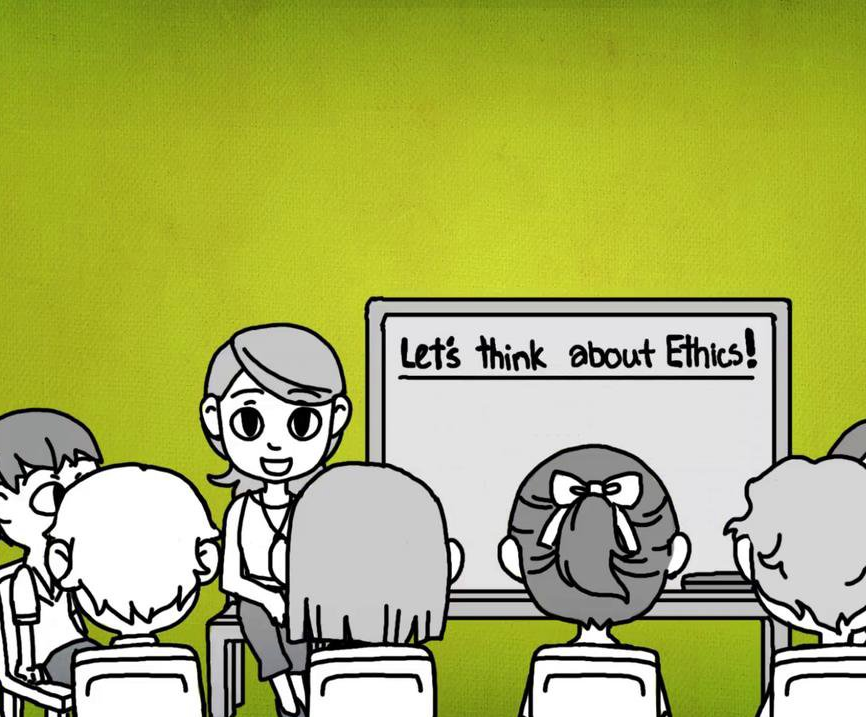
Should ethics be taught in schools?
In New South Wales, Australia, classes on secular ethics have been offered to some students as an alternative to religious studies since 2010. A programme called ‘Primary Ethics’ is now taught to around 20,000 students in more than 300 schools. It introduces discussion of moral issues in a systematic way and provides an educational…
-
Oxford Uehiro Prize in Practical Ethics: Giving Ourselves Away, by Callum Hackett
This essay, by Oxford graduate student Callum Hackett, is one of the six shortlisted essays in the graduate category of the inaugural Oxford Uehiro Prize in Practical Ethics. ‘Giving Ourselves Away: online communication alters the self and society’ Invention is a fertile source of new ethical problems because creating new tools creates questions about how they might be used for…
-
Oxford Uehiro Prize in Practical Ethics: May the state limit the free speech of individuals who advocate against vaccines intended to combat infectious disease? by Miles Unterreiner
This essay, by Oxford graduate student Miles Unterreiner, is one of the two finalists in the graduate category of the inaugural Oxford Uehiro Prize in Practical Ethics. Miles will be presenting this paper, along with three other finalists, at the 12th March final. May the state limit the free speech of individuals who advocate against vaccines intended to combat…