
Loebel Lecture 3 of 3: What is the upshot?
Lecture 3 Audio [MP3] | YouTube link [MP4]
Grove Auditorium, Magdalen College, Longwall Street, Oxford
5 November 2015, 6-8pmRead More »Loebel Lecture 3 of 3: What is the upshot?
Lecture 3 Audio [MP3] | YouTube link [MP4]
Grove Auditorium, Magdalen College, Longwall Street, Oxford
5 November 2015, 6-8pmRead More »Loebel Lecture 3 of 3: What is the upshot?
Lecture 2 Audio [MP3] | YouTube link [MP4]
Grove Auditorium, Magdalen College, Longwall Street, Oxford
4 November 2015, 6-8pmRead More »Lecture 2 of 3: Science is quietly, inexorably eroding many core assumptions underlying psychiatry
The 2015 Loebel Lectures in Psychiatry and Philosophy were delivered by Professor Steven E. Hyman, director of the Stanley Center for Psychiatric Research at the Broad Institute of MIT and Harvard as well as Harvard University Distinguished Service Professor of Stem Cell and Regenerative Biology. Both the lecture series and the one-day workshop proved popular and were well-attended.Read More »Loebel Lectures and Workshop, Michaelmas Term 2015, Lecture 1 of 3: Neurobiological materialism collides with the experience of being human
Written by Melanie Trouessin
University of Lyon
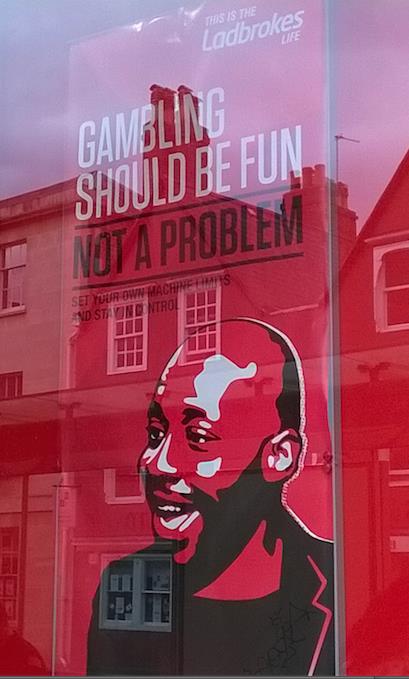 Faced with issues related to gambling and games of chance, the Responsible Gambling program aims to promote moderate behaviour on the part of the player. It is about encouraging risk avoidance and offering self-limiting strategies, both temporal and financial, in order to counteract the player’s tendency to lose self-control. If this strategy rightly promotes individual autonomy, compared with other more paternalist measures, it also implies a particular position on the philosophical question of what is normal and what is pathological: a position of continuum. If we can subscribe in some measures of self-constraint in order to come back to a responsible namely moderate and controlled gambling, it implies there is not a huge gulf or qualitative difference between normal gaming and pathological gambling.Read More »Guest Post: “Gambling should be fun, not a problem”: why strategies of self-control may be paradoxical.
Written by Anke Snoek
Macquarie University
I have a 3 year old who doesn’t eat. He seems not to be interested in food in general. We were offered many explanations for why he doesn’t eat and most specialists suspect a psychological source for his lack of appetite. But recently a friend suggested that maybe there is something wrong with the muscles in his mouth that makes it hard to swallow. I wondered: why didn’t I get offered more of these physical explanations as opposed to psychological ones? What makes ‘not eating’ almost by definition a mental disorder for most people? What other behaviour are we inclined to label as a mental disorder rather than staying open for other explanations?Read More »Guest Post: What puts the ‘mental’ in mental illness?
Written by Professor Neil Levy The recent discovery of what is claimed to be a distinct species of the genus Homo, our genus, raises to three the number of species that may have co-existed with Homo Sapiens. Homo naledi is yet to be dated, but it may be only tens of thousands of years old;… Read More »Living With Other Hominids
Written by Darlei Dall’Agnol[1]

Stephen Hawking has recently made two very strong declarations:
I wonder whether there is a close connection between the two. In fact, I believe that the second will be true only if the first is. But philosophy is not dead and it may undoubtedly help us to prevent the catastrophic consequences of misusing science and technology. Thus, I will argue that it is through the enhancement of our wisdom that we can hope to avoid artificial intelligence (AI) causing the end of mankind. Read More »Guest Post: ENHANCING WISDOM

Just out today is a podcast interview for Smart Drug Smarts between host Jesse Lawler and interviewee Brian D. Earp on “The Medicalization of Love” (title taken from a recent paper with Anders Sandberg and Julian Savulescu, available from the Cambridge Quarterly of Healthcare Ethics, here). Below is the abstract and link to the interview: Abstract What is love? A… Read More »“The medicalization of love” – podcast interview
Written by David Aldridge
Oxford Brookes University
Recently a colleague offered in conversation that we should agree to disagree. This led me to some observations about the role of agreement and disagreement in dialogue. Some conversations involve a sort of perpetual agreement or mutual affirmation. These are instances where we’re really just ‘shooting the breeze’, and there’s nothing much at issue between us. We exchange the gnomes of accepted wisdom and nod. Other exchanges are characterised pretty much by disagreement. These are the situations where we talk at cross purposes, or talk past each other – we can’t even seem to get started on the way in which the matter at hand needs to be interrogated. Read More »Guest Post: Agree to disagree? Let’s not.
Written by Constantin Vica
Postdoctoral Fellow, Romanian Academy Iasi Branch
Research Center in Applied Ethics, University of Bucharest
This post is not, as one might expect, about that part of ethics which is not concerned about practical issues, e.g. meta-ethics. Neither is it about moral philosophical endeavors which are incomprehensible, highly conceptual and without any adherence to real people’s lives. And, more than that, it is not about how impractical a philosophy/ethics diploma is for finding a job.
One month ago Peter Singer, the leading ethicist and philosopher, was ‘disinvited’ from a philosophy festival in Cologne. It wasn’t the first time such a thing happened and perhaps Peter Singer wasn’t too impressed by the incident. Despite all of these things, the fact has a not-so-nice implication: “you, the practical ethicist, are not welcome to our city!” Of course, Peter Singer is not the first philosopher ‘disinvited’ (horribile dictu) by an ‘honorable’ audience; the history of philosophy and free thinking has an extensive collection of undesirable individuals expelled, exiled, and even killed by furious or ignorant citizens and stubborn elites. But, one might wonder, what is different this time?Read More »Guest Post: Impractical ethics