
Skip to content

Ethics

The Unfairness of Unattractiveness

In the job market being attractive is advantageous. According to economist Daniel Hamermesh, an attractive man can earn, over a life time, $230,000 more than an unattractive one[1]. Attractive solicitors raise more money for charities[2].  Very attractive individuals are less likely to engage in criminal activities, whereas unattractive ones have higher propensity for crime[3]. Attractive criminals are punished less severely than unattractive ones[4].

Both children and adults judge attractive people to be more helpful, more intelligent, and more friendly than their unattractive counterparts[5].

Cute infants elicit stronger motivation for care-taking than less cute ones[6]. Moreover, cute infants are rated as most adoptable[7].

Adults have higher expectations of attractive kids compared to non attractive ones[8] and mothers of attractive infants tend to be more affectionate, playful, and attentive when interacting with their children than mothers of less attractive infants[9]. Teachers expect better performances from attractive students[10]. Transgressions of unattractive children are judged more negatively than transgressions of attractive ones[11].

Being attractive is also an advantage in romantic relationships[12] as there is a positive correlation  between physical attractiveness and dating [13][14].

One response to unfairness is to get people to stop discriminating unfairly. This might work for some domains, such as employment where interviews could be conducted blind. But it won’t be possible to counteract all the potential downsides.

We can’t require people to like or fall in love with people they find unattractive. There are at least two possible responses:

  1. Assist people to find attractive what they currently find unattractive
  2. Assist people to be more attractive to those who currently find them unattractive

Both of these are reasonable solutions. The second is cosmetic enhancement.
Read More »The Unfairness of Unattractiveness

Bring Your Own Boundaries: Pokémon GO and the Challenge of Ambient Fun

By James Williams (@WilliamsJames_) (Words: 2500 | Reading time: 12 minutes | Gross misuses of the ‘Poké-‘ prefix: 6) 1. I’m not a Pokémaster; I haven’t ‘caught them all.’ If you were to hold a gun to my head and force me to answer Poké-trivia (as one does), my strategy would probably consist of murmuring ‘Pikachu?’ in varied… Read More »Bring Your Own Boundaries: Pokémon GO and the Challenge of Ambient Fun

In Praise of Ambivalence—“Young” Feminism, Gender Identity, and Free Speech

By Brian D. Earp (@briandavidearp)

Introduction

Alice Dreger, the historian of science, sex researcher, activist, and author of a much-discussed book of last year, has recently called attention to the loss of ambivalence as an acceptable attitude in contemporary politics and beyond. “Once upon a time,” she writes, “we were allowed to feel ambivalent about people. We were allowed to say, ‘I like what they did here, but that bit over there doesn’t thrill me so much.’ Those days are gone. Today the rule is that if someone—a scientist, a writer, a broadcaster, a politician—does one thing we don’t like, they’re dead to us.”

I’m going to suggest that this development leads to another kind of loss: the loss of our ability to work together, or better, learn from each other, despite intense disagreement over certain issues. Whether it’s because our opponent hails from a different political party, or voted differently on a key referendum, or thinks about economics or gun control or immigration or social values—or whatever—in a way we struggle to comprehend, our collective habit of shouting at each other with fingers stuffed in our ears has reached a breaking point.

It’s time to bring ambivalence back.Read More »In Praise of Ambivalence—“Young” Feminism, Gender Identity, and Free Speech

Love by design: when science meets sex, lust, attraction and attachment

A version of this post was originally published in the Conversation 

You are on holiday with your partner of several years. Your relationship is going pretty well, but you wonder if it could be better. It’s Valentine’s Day and you find a bottle on the beach. You rub it. A love genie appears. He (or she) will grant you three special Valentine wishes. Here are some of your choices:

  • to have more or less sexual desire (lust);
  • to remain always as “in love” as you were when you first fell in love (romantic attraction);
  • to be more or less bonded to your partner emotionally (attachment);
  • to be (happily) monogamous or polygamous.

What would you choose? What should you choose? What would your partner choose? Would you choose together, if you could? What would you choose for your partner?

Read More »Love by design: when science meets sex, lust, attraction and attachment

Crosspost: Bring back the dead

A version of this post was originally published at The Conversation.

A trial to see if it is possible to regenerate brains in patients that have been declared clinically dead has been approved. Reanima Advanced Biosciences aims at using stem cells, injections of peptides, and nerve stimulation to cause regeneration in brain dead patients. The primary outcome measure is “reversal of brain death as noted in clinical examination or EEG”, which at least scores high on ambition. The study accepts healthy volunteers, but they need to be brain dead due to traumatic brain injury, which might discourage most people.

Is there any problem with this?Read More »Crosspost: Bring back the dead

Private education: in defence of hypocrisy

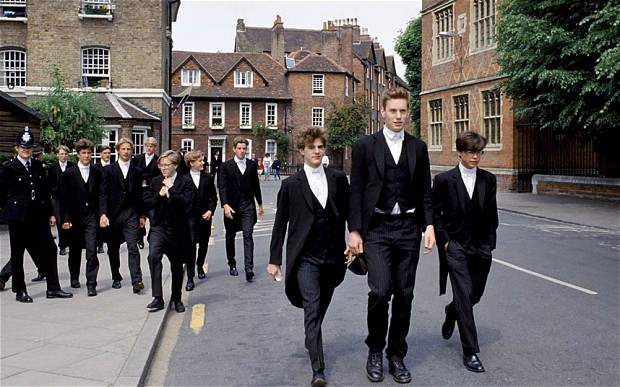
eton_2855585b(Photo: Daily Telegraph)

I am a bitter opponent of private education. All my political hackles rise whenever the subject is mentioned.

Yet of my four currently school-aged children, one (‘A’) is educated privately (at a specialist choir school), and another (‘B’, who is dyslexic) will shortly be in private education (at a hip, Indian-cotton swathed, high-fibre, bongo-drumming, holistic school). The two others (‘C’ and ‘D’) are currently in state primary schools. There are two older children too (‘E’ and ‘F’) They were both educated privately, at a fairly traditional school.

How can I live with myself?

One way would be to avert my eyes from the apparently plain discrepancy between my actions and my political convictions. That’s often been my strategy. But I want to attempt some kind of defence – at least in relation to A and B, and lay the ground for a potential defence in relation to C and D, should we choose to educate them privately.Read More »Private education: in defence of hypocrisy

Animal suffering and the pointlessness of moral philosophy

(Above image here) Consider the infamous Chinese dog market. Dogs are rounded up, sometimes beaten while still alive (ostensibly to improve the flavour of their meat), killed, and eaten.

Everyone I know thinks it’s obscene, and that the suffering of the dogs cannot possibly be outweighed by the sensual satisfaction of the diners, the desirability of not interfering, colonially, with practices acceptable in another culture, or by any other consideration. It’s just wrong.

‘It’s just wrong’ is the observation that moral philosophers exist to denounce. They draw their salaries for interrogating this observation, exploding its naivety, and showing that the unexamined observation is the observation not worth making.

But what can the moral philosophers bring to the discussion about the Chinese dogs? Alone, and unaided by science, not much. The philosophy turns out to be either (a) reheated science or (b) a description of our intuitions, together with more or less bare assertions that those intuitions are either good or bad. Read More »Animal suffering and the pointlessness of moral philosophy

Should Rhodes stay or should he go? On the ethics of removing controversial statues

This is an unedited version of an article originally published by The Conversation.

Picture this: it’s 20 April 2021 and the charming Austrian village of Braunau am Inn – Hitler’s birth place – reveals a new statue of Adolf Hitler on the main square. In his inauguration speech, the mayor stresses that although Hitler obviously did many immoral deeds, he also achieved some good things, such as building motorways and railroads, and advancing rocket science. With the new statue, the village wishes to commemorate Hitler’s valuable contributions to Germany and Austria, contributions from which many still reap benefits.

If this scenario were to occur,[1] it would cause a public outcry. It would be considered offensive and disrespectful towards Hitler’s victims and their families. It would also be seen as conveying implicit approval or tolerance of the atrocities that were committed in his name, perhaps making the village authorities complicit in the continuing stigmatisation of those same groups targeted by Hitler. In no time, the village would succumb to the pressure to take it down.

Rhodes-statue-removed
Removal of the Rhodes statue at the University of Cape Town

If there are good reasons not to erect a statue of Hitler, are there also good reasons to remove existing statues that some find problematic, such as that of the controversial British imperialist Cecil Rhodes?

In January, after months of heated debate and Rhodes Must Fall activism, Oxford University’s Oriel College decided to leave a statue of Rhodes on his pedestal at the front of the college. But protests are continuing against Oriel’s decision – mixed in with calls to remove statues of other controversial imperialist figures.Read More »Should Rhodes stay or should he go? On the ethics of removing controversial statues

Using birth control to combat Zika virus could affect future generations

  • by

Written by Simon Beard
Research Fellow in Philosophy, Future of Humanity Institute, University of Oxford

This is a cross post of an article which originally appeared in The Conversation.

In a recent article, Oxford University’s director of medical ethics, Dominic Wilkinson, argued that birth control was a key way of tackling the Zika virus’s apparently devastating effects on unborn children – a strategy that comes with the extra benefit of meeting the need for reproductive health across much of the affected areas.

However, although this approach might be one solution to a medical issue, it doesn’t consider the demographic implications of delaying pregnancy on such an unprecedented scale – some of which could have a significant impact on people and societies.Read More »Using birth control to combat Zika virus could affect future generations

The unbearable asymmetry of bullshit

By Brian D. Earp (@briandavidearp)

Introduction

Science and medicine have done a lot for the world. Diseases have been eradicated, rockets have been sent to the moon, and convincing, causal explanations have been given for a whole range of formerly inscrutable phenomena. Notwithstanding recent concerns about sloppy research, small sample sizes, and challenges in replicating major findings—concerns I share and which I have written about at length — I still believe that the scientific method is the best available tool for getting at empirical truth. Or to put it a slightly different way (if I may paraphrase Winston Churchill’s famous remark about democracy): it is perhaps the worst tool, except for all the rest.

Scientists are people too

In other words, science is flawed. And scientists are people too. While it is true that most scientists — at least the ones I know and work with — are hell-bent on getting things right, they are not therefore immune from human foibles. If they want to keep their jobs, at least, they must contend with a perverse “publish or perish” incentive structure that tends to reward flashy findings and high-volume “productivity” over painstaking, reliable research. On top of that, they have reputations to defend, egos to protect, and grants to pursue. They get tired. They get overwhelmed. They don’t always check their references, or even read what they cite. They have cognitive and emotional limitations, not to mention biases, like everyone else.

At the same time, as the psychologist Gary Marcus has recently put it, “it is facile to dismiss science itself. The most careful scientists, and the best science journalists, realize that all science is provisional. There will always be things that we haven’t figured out yet, and even some that we get wrong.” But science is not just about conclusions, he argues, which are occasionally (or even frequently) incorrect. Instead, “It’s about a methodology for investigation, which includes, at its core, a relentless drive towards questioning that which came before.” You can both “love science,” he concludes, “and question it.”

I agree with Marcus. In fact, I agree with him so much that I would like to go a step further: if you love science, you had better question it, and question it well, so it can live up to its potential.

And it is with that in mind that I bring up the subject of bullshit.

Read More »The unbearable asymmetry of bullshit