
-
What are ethical and unethical intentions to conceive a child?
In today’s blog, I want to ask you for your opinions on a question that has been bothering me for some days now. The question relates to the potential motivations of couples who try to have a baby. My question is: What are ethical – and what are unethical – intentions to conceive a child,…
-
A World without Advertising?
Recently , UNICEF launched their Children’s Rights and Business Principles, the sixth of which says that businesses should ‘use marketing and advertising that respect and support children’s rights’. This is hard to deny, as is the claim that many companies are seeking unjustifiably to manipulate children and their parents for profit. Indeed there seems little reason to restrict…
-
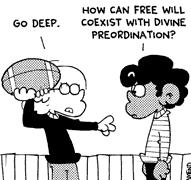
The will is caused, not free
By Brian Earp See Brian’s most recent previous post by clicking here. See all of Brian’s previous posts by clicking here. Follow Brian on Twitter by clicking here. The will is caused, not free Everyone is talking about free will these days. Sam Harris has a new book out. Eric MacDonald has weighed in…
-
Just give me the Humbug
We’ve all had fun hating Goldman Sachs again after one of their own sold them out . Mr Smith says that ‘culture was the secret sauce that made [Goldman] great and allowed us to earn our clients’ trust for 143 years’ whereas now Goldman pursues its own interest rather than its clients’ due to a…
-
Old threats never die, they fade away from our minds: nuclear winter
In 1983, scientists published a paper on nuclear winter. This boosted the death toll of all-out nuclear war from ‘only’ 200-500 million to the very real possibility of the complete extinction of the human race*. But some argued the report was alarmist, and there did seem to be some issues with the assumptions. So – a military phenomena that might cause…
-
Kony 2012, Malaria and Pizza
Last week this blog mentioned the Kony 2012 video, and suggested that many of the criticisms of it were ‘dishonest’ in a particular sense, and biased. Criticisms of such a worthy cause, and other charities seeming to piggy-back on Kony 2012’s success, often meet with great anger. But such piggy-backing is entirely justifiable.
-
Planet of the (Little) Apes
The Daily Mail has recently published an article entitled ‘Planet of the (little) apes: Save the world by genetically engineering humans to be smaller, suggests NYU philosopher.’ (http://www.dailymail.co.uk/sciencetech/article-2114430/Save-planet-genetically-engineering-humans-smaller-suggests-NYU-philosopher.html) It is always good to see the Daily Mail covering philosophy and covering issues in applied ethics in particular. The NYU philosopher in question is former Uehiro…
-
Which is least unethical—buying a Mac, or buying a PC?
Recent news stories have brought to public attention the fact that many Apple products, including iPhones, iPads, and Macs, are produced in part in factories with a record of using child labour, failing to provide safe work conditions, and requiring employees to work long shifts for low wages (see, for example, here, here, here and…
-
How Tony Nicklinson Already Has the Right to Die
According to a BBC report, Tony Nicklinson, 58, from Melksham, Wiltshire, has “locked-in syndrome” after a stroke in 2005 and “is unable to carry out his own suicide.” “He is seeking legal protection for any doctor who helps him end his life.” In fact, it is not quite correct that Tony Nicklinson “is unable to…
-
Free Speech: Some Comments
The issue of free speech has been directly addressed by at least one recent post and raised during the course of a number of other discussions. So, here are some of my own observations on the subject. 1 As a rough generalisation, I would say that those who discuss the subject tend to fall into…