
-
Pheasant Shooting: Bad for Pheasants, Worse for Humans?
At the beginning of this month, the pheasant shooting season began. Pheasant shooting is little discussed – it’s usually seen just as a harmless country pass time. However, it’s far from clear that it really is as unobjectionable as this neglect implies.
-
Using Close Genes: A Suggestion
Today, if a gay couple wants to have a child, they have two main options: Either (1) they adopt a child or (2) they get an egg from a donor, have it fertilized in a laboratory, and have a surrogate mother carry and give birth to their child. These are both good options. Imagine, however, that…
-
Prize After Death
On Friday, Dr. Ralph Steinman died. On Monday, he won the Nobel Prize for Medicine. This posed a problem for the Nobel committee. Per the award foundation’s bylaws, prizes may not be awarded posthumously. The committee met in emergency session, and resolved to avoid the heartless option of rescinding the dead man’s prize. This seems a…
-
Should ‘Ecocide’ Be a Crime?
Today, my colleague Michael Mansfield QC appears in a mock trial in the Supreme Court that considers the crime of ‘ecocide’. The project is the brainchild of lawyer Polly Higgins. Ecocide is defined as: ‘The extensive damage, destruction to or loss of ecosystems of a given territory, whether by human agency or by other causes,…
-
Legalize heroin
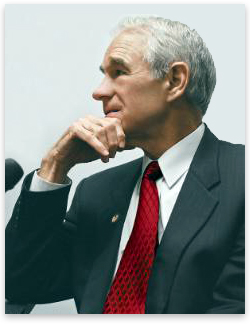
By Brian Earp Follow Brian on Twitter by clicking here. Forget about “medical marijuana.” Isn’t it time to legalize heroin in the United States? Recreational cocaine? Ecstasy? LSD? How about the whole nefarious basketful of so-called ‘harder’ drugs? Yes, it is, says Ron Paul, a fourteen-term libertarian congressman and obstetrician from the state of…
-
Is a child a blessing?
By Charles Foster Three years ago Ana Mejia bore a son, Bryan Santana. To her surprise he had no arms and only one leg. I should have been warned about this, she recently told a Florida court. It was negligent not to warn me. Had I been warned, I would have had an abortion. She…
-
Fellow-Citizens, Foreigners, and Statistical Lives
Like many in the UK, I was gripped last week by the reports from Wales about the search for four trapped miners, and saddened to hear of their deaths. Readers outside the UK perhaps heard nothing, or very little, about this story, thought it dominated the news here. One important reason for that, of course,…
-
Buying authenticity: plagiarism checking and counter-checking
Alex Tabarrok on Marginal Revolution posted about how the software company Turnitin is not just helping schools detect student plagiarism, but also providing WriteCheck, a tool for checking that a paper is non-infringing. Are they providing a useful service for conscientious students to avoid unconscious infringement, or just playing both sides of the fence, profiting from…
-
Should one have a tummy tuck?
“Beauty is a greater recommendation than any letter of introduction.” – Arthur Schopenhauer, Aphorisms on the Wisdom of Life As our wealth increases, more and more of us undergo cosmetic surgery: From tummy tucks, breast enlargements and nose jobs to hair transplants and face-lifts: You name it—and pay—they fix it. Even though cosmetic surgery has…