Skip to content

‘Please drink responsibly’: voluntary intoxication and generating responsibilities

‘Please drink responsibly’: voluntary intoxication and generating responsibilities

A scenario:

You are with a group of friends in a bar on a Friday night and one of them has had rather a lot to drink – much more than he usually does. He seems happy, despite slurring his words and taking a few moments to get his balance. But, as he slurs his goodbye at the door of the bar, it flashes through your mind that maybe you should walk him home. ‘Nah’, you think, ‘he’ll be fine’ – and he would certainly protest. Ten minutes later he stumbles and falls into the river and drowns. Did you have a duty to walk him home? What about the others in your group? Moreover, might that duty have been a legal one?


Read More »‘Please drink responsibly’: voluntary intoxication and generating responsibilities

New Study Detects Free Will in the Prefrontal Cortex (UPDATED)

An impressive study to be released in the journal Science on Monday uses new imaging techniques to reveal exercises of free will occurring in the brain. The authors scanned participants in their experiments who were choosing a playing card from a freshly shuffled deck. One group of subjects were asked to: “Pick a card, any card” (using their free choice), whereas a control group were asked to select various specific cards (simply obeying a command). The explanation of how precisely free will was detected is somewhat technical, but it can be roughly understood this way: by subtracting the brain activity of the control group from those in the free will group, the experimenters were able to observe free will in the differences. They found numerous traces of free will occurring in the prefrontal cortex, which has traditionally been thought to be the seat of executive control.

Read More »New Study Detects Free Will in the Prefrontal Cortex (UPDATED)

A Teeny-Weeny Baby Puzzle

I have been thinking about babies recently, for various reasons (let’s call them Saul).  It had always struck me that procreation was a classic example of a prisoner’s dilemma.  It was good for each couple to have children, but if everyone churned out these resource-chomping monsters it was disastrous for us all.

That was until friends (philosophers) kindly pointed out that study after study shows that having children actually makes people unhappy.Read More »A Teeny-Weeny Baby Puzzle

Nudge Drugs: should the social side-effects of medications weigh into public health?

You are a public health official responsible for the purchasing of medications for the hospitals within your catchment area in the NHS. Your policies significantly affect which, out of the serpentine lists of heart disease medications, for example, are available to your patients. Today, you must choose between purchasing one of three heart disease medications: Drug A, Drug B, and Drug C. They are pretty similar in efficacy, and all three have been being used for many years. Drug B is slightly less expensive than Drug A and Drug C, but there is emerging evidence that it increases the likelihood that patients will take “bad bets,” i.e. make large gambles when the chance of winning is low (and thus might contribute to large social costs). Drug C costs a tiny bit more than Drug A, but there is some evidence that Drug C may help decrease implicit racial bias. You have been briefed on the research suggesting that implicit racial bias can lead to people making choices that consistently and unintentionally limit the opportunities of certain groups, even when all the involved parties show explicit commitments to social equality.  Finally, there is emerging evidence that drug A both helps people abstain from alcohol and dissociates negative emotional content from memories.

Which drug should you purchase?


Let us begin to think about this question through the lens of the idea of the “Nudge,” which has exploded onto the public sphere (and blogosphere) since Thaler and Sunstein’s published their book, “Nudge: improving decisions about health, wealth, and happiness.”   (see the blog here). I briefly and incompletely introduce nudges here, in hopes that we may soon move on to discuss the kind of “nudge drugs” our thought experiment considers.

Read More »Nudge Drugs: should the social side-effects of medications weigh into public health?

Unbelievers are bad and have defective brains

By Charles Foster

You’d better believe that believers are better.

So far as religiosity is concerned, humanity, say Cooper and Pullig , is divided fairly neatly into three clusters: Skeptics, Nominals and Devouts. The bulk of the evidence suggests that there is a relationship between religiousness and moral reasoning. That relationship, though, is complex. Its anatomy needs a lot of exploration. Cooper’s and Pullig’s exciting and audacious paper, which concerns broadly Christian religiosity amongst marketing students in the US, suggests that narcissism is a factor in explaining why individuals make wrong ethical decisions. That in itself isn’t surprising. Narcissism, for instance, is a predictor of white-collar crime in business: narcissistic individuals tend to think that they are above the laws that govern the behaviour of lesser mortals. What is perhaps surprising is that ethical decision-making was affected by narcissism only in Nominals and Devouts. The reasons for that can be speculated about very entertainingly. But I want to highlight one almost incidental observation: ‘Notably, Skeptics in general exhibit worse ethical judgment than respondents in either of the other two clusters.’

Read More »Unbelievers are bad and have defective brains

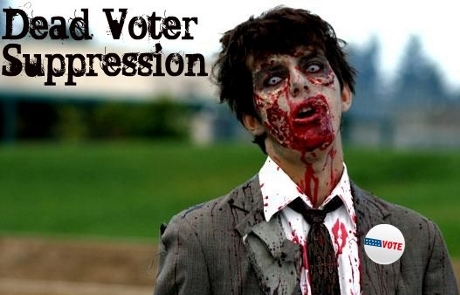
Should the government have policies to deal with fear of zombies?

Would you vote to be protected from him?

From the always sublime Dara O’Briain:

I give out when people talk about crime going up, but the numbers are definitely down. And if you go, “The numbers are down”, they go, “Ahh, but the fear of crime is rising.” Well, so fucking what? Zombies are at an all-time low level, but the fear of zombies could be incredibly high. It doesn’t mean you have to have government policies to deal with the fear of zombies.

But let’s look at this in more detail. If there was a large demand for it, should the government have policies to deal with the fear of zombies? By zombies, we do mean non-existent flesh-eating fictional undead monstrosities that don’t exist.

Read More »Should the government have policies to deal with fear of zombies?

A World without Advertising?

Recently , UNICEF launched their Children’s Rights and Business Principles, the sixth of which says that businesses should ‘use marketing and advertising that respect and support children’s rights’. This is hard to deny, as is the claim that many companies are seeking unjustifiably to manipulate children and their parents for profit. Indeed there seems little reason to restrict… Read More »A World without Advertising?

The will is caused, not free

By Brian Earp

See Brian’s most recent previous post by clicking here.

See all of Brian’s previous posts by clicking here.

Follow Brian on Twitter by clicking here.


The will is caused, not free

Everyone is talking about free will these days. Sam Harris has a new book out. Eric MacDonald has weighed in on that. Jerry Coyne, Paul Bloom, and some philosopher-types have a debate going on in the Chronicle of Higher Education. And way back in 2009 the Society for Personality and Social Psychology hosted a “showdown” between psychologists Roy Baumeister and John Bargh on the topic: What does the ‘free’ in ‘free will’ really mean? [A video of Bargh’s half can be seen here. Baumeister is here.]

The SPSP conference led to a fiery exchange of blog posts between the two principles, and then to a more sedated pair of papers in the society’s newsletter, Dialogue. Baumeister enlisted Kathleen Vohs to co-author his piece, and Bargh (for some reason) enlisted me. Here is what Professor Bargh and I had to say — after this delightful FoxTrot comic by Bill Amend.

Read More »The will is caused, not free

Just give me the Humbug

We’ve all had fun hating Goldman Sachs again after one of their own sold them out . Mr Smith says that ‘culture was the secret sauce that made [Goldman] great and allowed us to earn our clients’ trust for 143 years’ whereas now Goldman pursues its own interest rather than its clients’ due to a ‘decline in the firm’s moral fibre’…. Hold on. Yes, I know its hard not to burst out laughing.

Read More »Just give me the Humbug