
-
The goodness of being multi-planetary
The Economist has a leader “For life, not for an afterlife“, in which it argues that Elon Musk’s stated motivation to settle Mars – making humanity a multi-planetary species less likely to go extinct – is misguided: “Seeking to make Earth expendable is not a good reason to settle other planets”. Is it misguided, or is the…
-
Genome editing – the key ethical issues
Written by Dr Christopher Gyngell This article originally appeared on the OMS website The Nuffield Council of Bioethics released a report last Friday outlining the key ethical issues raised by genome editing technologies. Genome editing (GE) is a powerful, and extremely rapidly developing technology. It uses engineered enzymes to make precise, controlled modification to DNA.…
-
Guest Post: Epigenetics: Barriers to the translation of scientific knowledge into public policies
Written by Charles Dupras and Vardit Ravitsky Bioethics Programs, School of Public Health, University of Montreal Environmental epigenetics is a rising field of scientific research that has been receiving much attention. It explores how exposure to various physical and social environments (e.g. pollution or social adversity) affects gene expression and, eventually, our health. Environmental…
-
Cross Post: Ig Nobel Prize Winner: Why I Lived Like a Badger, an Otter, a Deer and a Swift
Written by Charles Foster, Research Associate, University of Oxford This article was originally published in The Conversation I have lived as a badger in a hole in a Welsh wood, as an otter in the rivers of Exmoor, an urban fox rummaging through the dustbins of London’s East End, a red deer in the West Highlands…
-
Cross Post: What do sugar and climate change have in common? Misplaced scepticism of the science
Written by Professor Neil Levy, Senior Research Fellow, Uehiro Centre for Practical Ethics, University of Oxford This article was originally published on The Conversation Erosion of the case against sugar. Shutterstock Why do we think that climate sceptics are irrational? A major reason is that almost none of them have any genuine expertise in climate…
-
Anybody Out There?
By Guy Kahane These days it seems as if every couple of weeks or so we get reports about newly discovered planets that are ever more similar to Earth. The most recent discovery, planet Proxima b, is the closest planet found so far; Scientific American called it ‘the Earth next door’. Last October, an amateur…
-
DNA papers, please
Kuwait is planning to build a complete DNA database of not just citizens but all other residents and temporary visitors. The motivation is claimed to be antiterrorism (the universal motivation!) and fighting crime. Many are outraged, from local lawyers over a UN human rights committee to the European Society of Human Genetics, and think that it will not be very…
-
Our special treatment of patients in a vegetative state is a form of cruel and unusual punishment
by Professor Dominic Wilkinson, @Neonatalethics Professor of Medical Ethics, Consultant Neonatologist Our society has good reason to provide special treatment to people with severe brain injuries and their families. But our current “special treatment” for a group of the most severely affected people with brain injuries leads to devastating, agonising, protracted and totally preventable…
-
The Tale of the Ethical Neonatologist – And Why There Shouldn’t Be a Legal Right of Conscientious Objection
Doctors have values. These are sometimes described as their conscience. Those values can conflict with what has evolved to be medical practice. Where that practice is consistent with principles, concept and norms of medical ethics, their values should not compromise patient care. The place for doctors to express their values and seek to revise the…
-
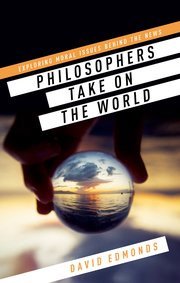
Philosophers Take on The World: David Edmonds
We are pleased to announce the publication of David Edmonds’ Philosophers Take on the World, an edited collection of short essays, many of which are by our bloggers. Every day the news shows us provoking stories about what’s going on in the world, about events which raise moral questions and problems. In Philosophers Take On the…